Two countries, one conversation on AI
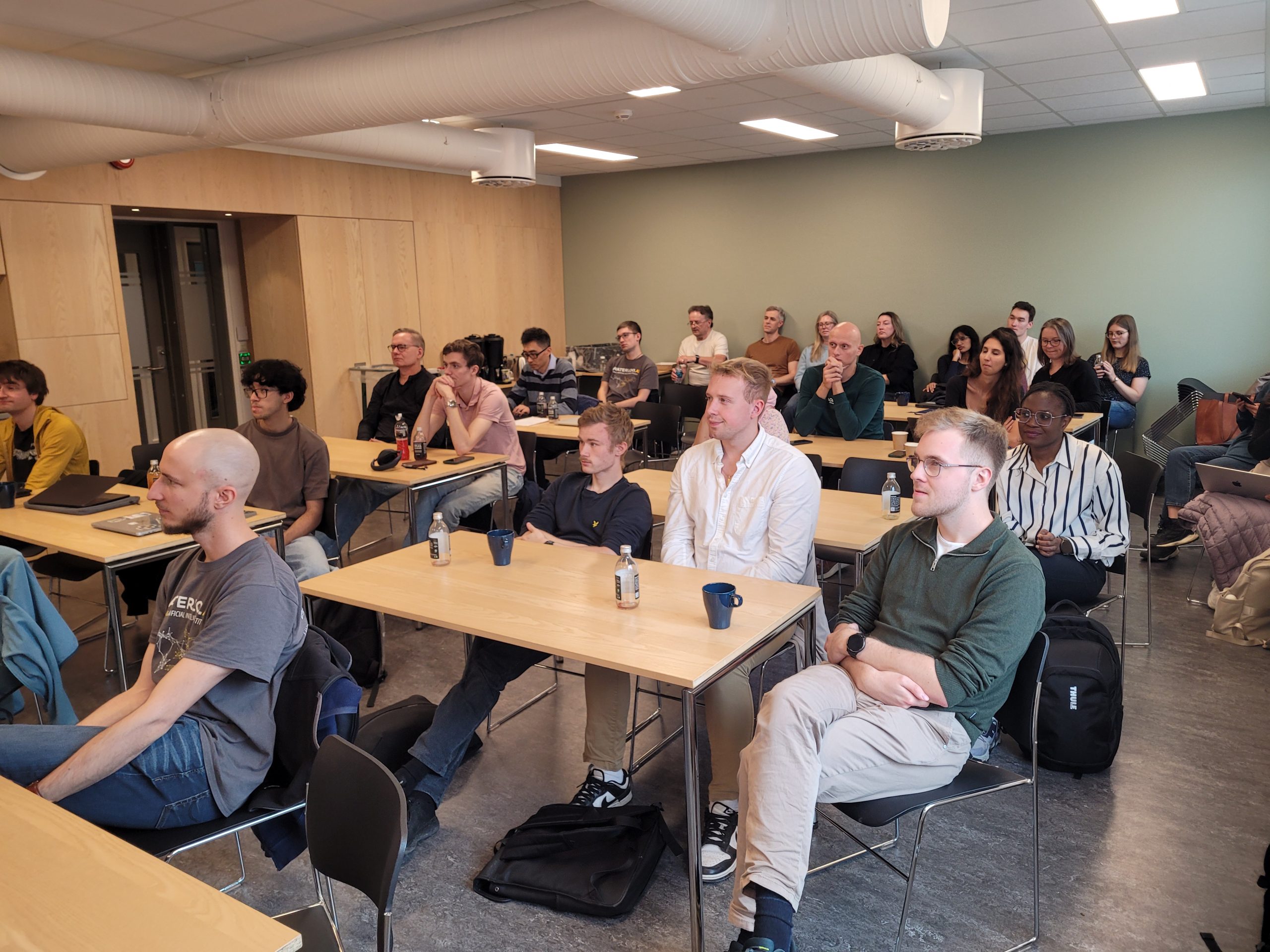
“AI Without Borders 2026: Connecting Canada and Norway” took place in Trondheim on 24–25 September 2026, bringing together AI researchers, students, AI leaders, and industry partners from NTNU and the University of Waterloo. Organised under the IWIL AI project, led by NTNU’s Department of Computer Science, the event combined expert talks, student perspectives and networking to explore emerging AI trends and future collaboration between the two countries.
Can we prepare for what AI will do next?
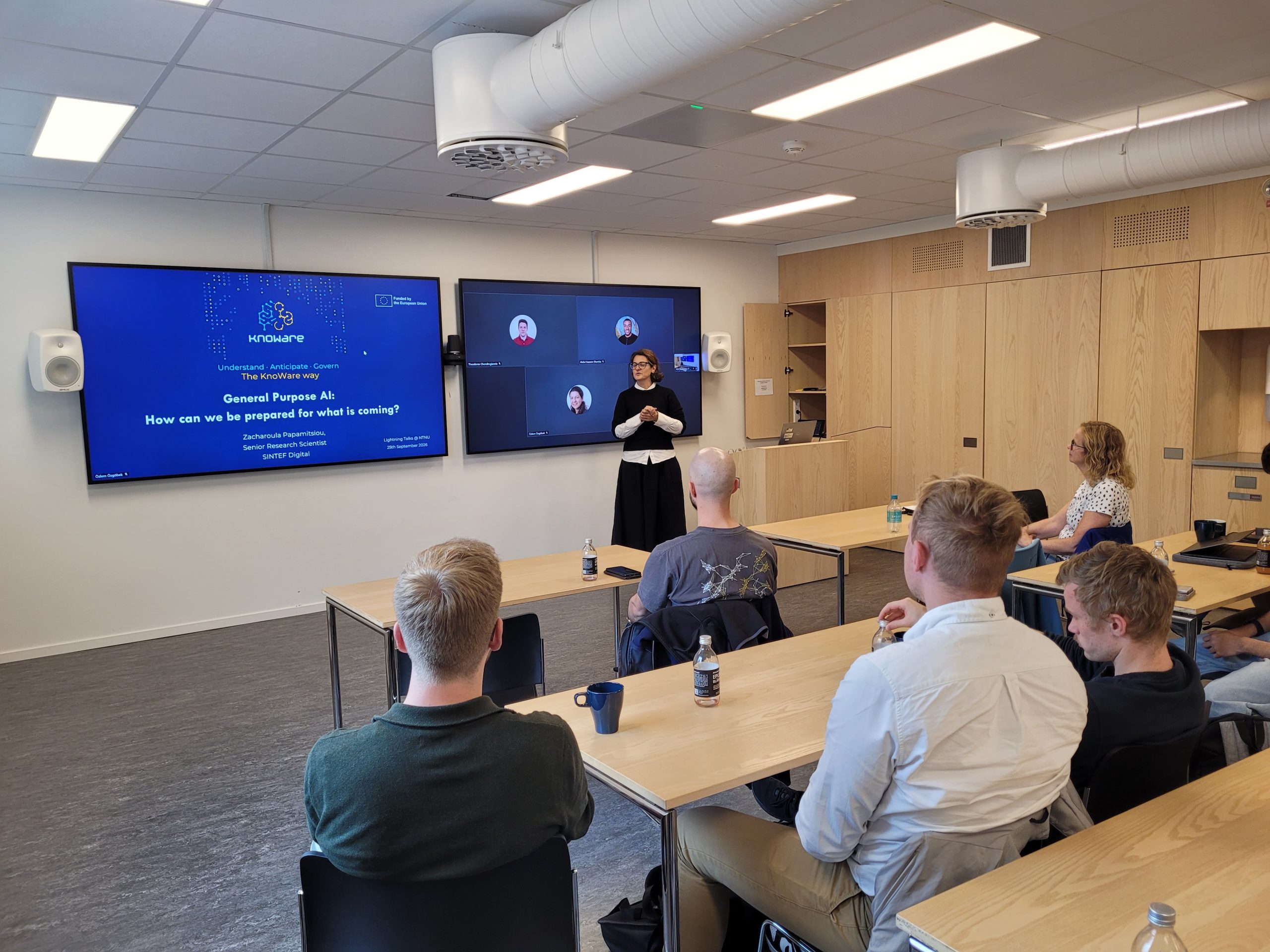
Our coordinator, Zacharoula Papamitsiou (SINTEF Digital), had the chance to present KnoWare during the Lightning Talks on 25 September. Her talk, “General Purpose AI: How can we be prepared for what is coming?“, tackled a growing problem: our ability to observe new AI capabilities is outpacing our ability to forecast and govern them.
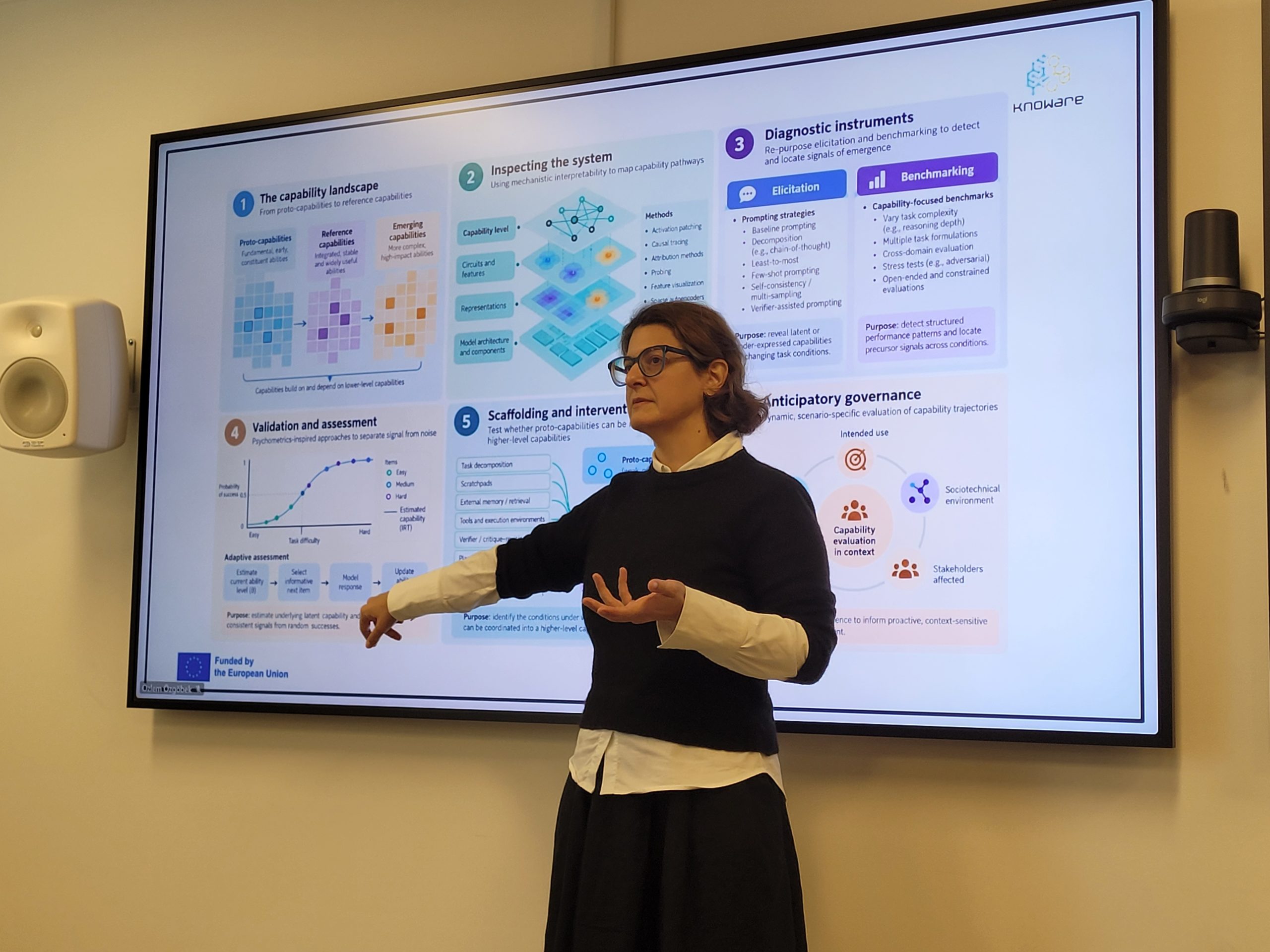
In response, she introduced the prefiguration hypothesis, the idea at the heart of KnoWare. Capabilities that seem to appear suddenly often take shape much earlier, once partial skills and conditions such as data, compute and architecture are in place, even in smaller models. These conditions leave weak signals that can be detected and interpreted before scaling or fine-tuning brings the capability into view. To study them, KnoWare combines a “periodic table” of capabilities, mechanistic interpretability, re-purposed benchmarking, psychometrics-inspired assessment and anticipatory governance.
Looking ahead
The next “sudden” capability may already be leaving traces. KnoWare’s job is to find them early, and events like this one help us compare notes with the people asking the same questions. Follow us on LinkedIn and subscribe to our newsletter to stay updated.